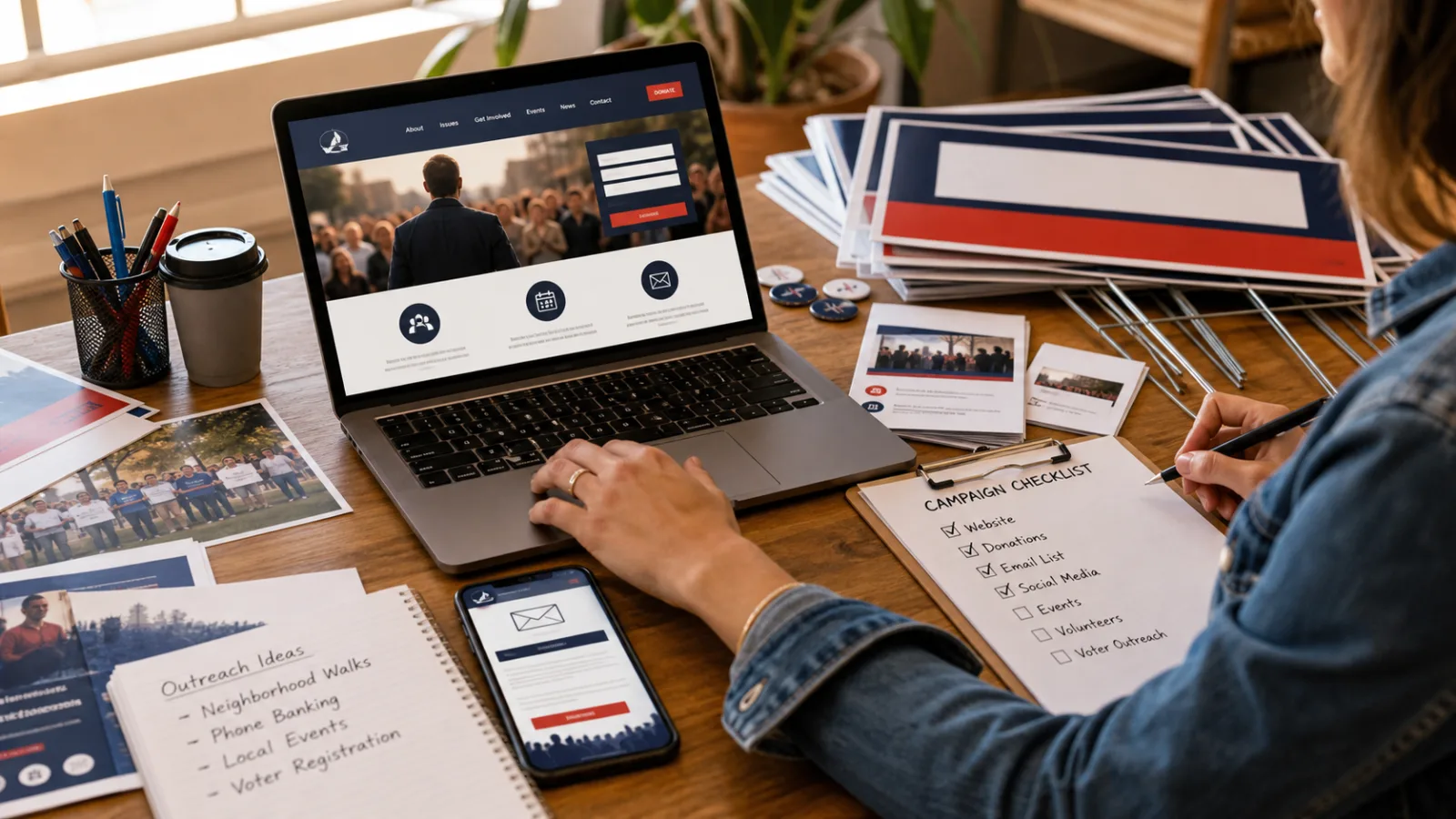
Treat the website as the campaign's official home base
A political website is most valuable when the campaign uses it as the central destination for public information. Social media, text messages, mailers, QR codes, email signatures, news releases, and community conversations should all be able to point back to one place that explains the candidate and the race clearly.
That home base should answer the questions people ask before they act: who is the candidate, what office are they seeking, what community do they serve, what priorities do they have, how can voters contact the campaign, how can supporters volunteer, and where can donors give through the campaign's approved contribution platform.
Build promotion around specific pages, not only the homepage
Campaigns often share the homepage for everything. That is easy, but it can make voters work too hard. If a post is about housing, schools, safety, jobs, taxes, roads, or local services, link directly to the relevant issue page. If the campaign needs volunteers for a weekend canvass, link directly to the volunteer form or event page.
This approach respects the visitor's intent. People are more likely to take action when the link lands on the page that matches the message they just saw. It also helps the campaign learn which topics and actions are actually driving interest.
- Use the biography page when introducing the candidate to new audiences.
- Use issue pages when discussing specific priorities.
- Use event pages for forums, canvasses, rallies, and meet-and-greets.
- Use volunteer and donation pages for direct action asks.
- Use news posts for announcements that need a permanent public link.
Make every offline material send people somewhere useful
Yard signs, palm cards, mailers, event handouts, business cards, and volunteer scripts should not simply display a URL as decoration. They should send people to a page that supports the moment. A general URL is fine for broad awareness, but a QR code on a volunteer flyer should go to the volunteer form, not a crowded homepage.
Before printing or distributing anything, test the page on a phone. The landing page should load quickly, show the right campaign, and make the next action obvious without requiring visitors to pinch, zoom, or hunt through a menu.
Use updates to show that the campaign is active
A campaign website should not look abandoned after the first launch. Add meaningful updates: endorsement announcements, event recaps, issue-page improvements, photos from community appearances, debate information, press mentions, or reminders about voter registration and election dates when appropriate.
Do not publish filler just to make the news section look busy. Useful updates create a public record and give social media, emails, and text messages a clean page to link to. PoliticalWin's news, events, media, and form sections are designed for this kind of steady campaign promotion without forcing the team to rebuild the website each time.
Review the promotion path before every major push
Before sending a donation email, volunteer text, press release, or social campaign, open the destination link like a voter would. Confirm that the page is current, the button works, the form sends to the right inbox, the donation link opens the correct external platform, and the mobile version looks trustworthy.
Promotion should never outrun the website. If the campaign is about to drive traffic to a page, that page should be ready for the attention.