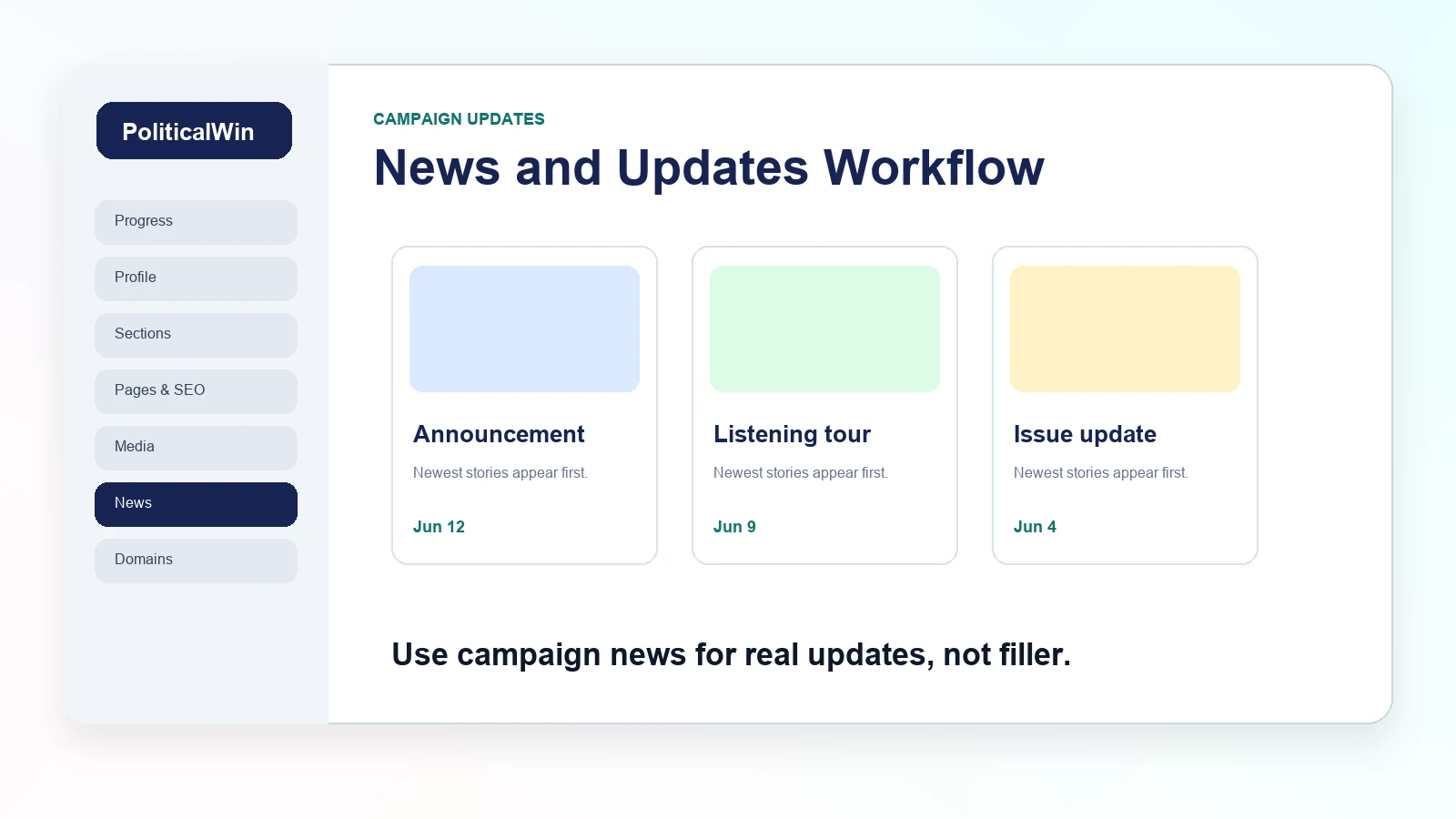
Treat campaign news as an official record
Campaign news should not feel like filler. It is the place for announcements, public statements, event recaps, press-style updates, major endorsements, policy explanations, and campaign milestones. A well-maintained news section gives voters, reporters, volunteers, and supporters one place to verify what the campaign has said.
The best news posts are specific. They name what happened, why it matters, and what the campaign wants voters to understand next. They do not need to sound like a national newspaper, but they should read like a serious campaign communication.
Use the title and excerpt to earn the click
Most visitors scan cards before reading a full article. The title should be clear enough to stand on its own, and the excerpt should summarize the value of the post. Avoid titles that are too vague, too long, or written only for insiders.
A campaign can sound confident without sounding artificial. Strong posts usually use a human voice, local context, and concrete details. If the article is about an event, include where it happened and who the campaign met. If it is about an issue, explain the practical problem before the proposal.
Use images that match the story
News images should help the article feel real. If the post is about a campaign announcement, use a candidate image. If it is about infrastructure, use a road, bridge, or local setting. If it is about a listening tour, use a meeting or community image.
Do not use a random stock-style image just because the slot is empty. A simple relevant visual is better than a glossy image that makes the article feel disconnected from the campaign.
Keep updates current
The news section should show the newest published posts first. That is how visitors expect campaign updates, media posts, and local news to work. If the newest article appears last, the site feels stale even when the content is fresh.
A campaign does not need to publish every day. It does need to avoid letting old announcements sit at the top when newer, more relevant updates exist. Use dates intentionally and archive or draft content that is no longer useful.